

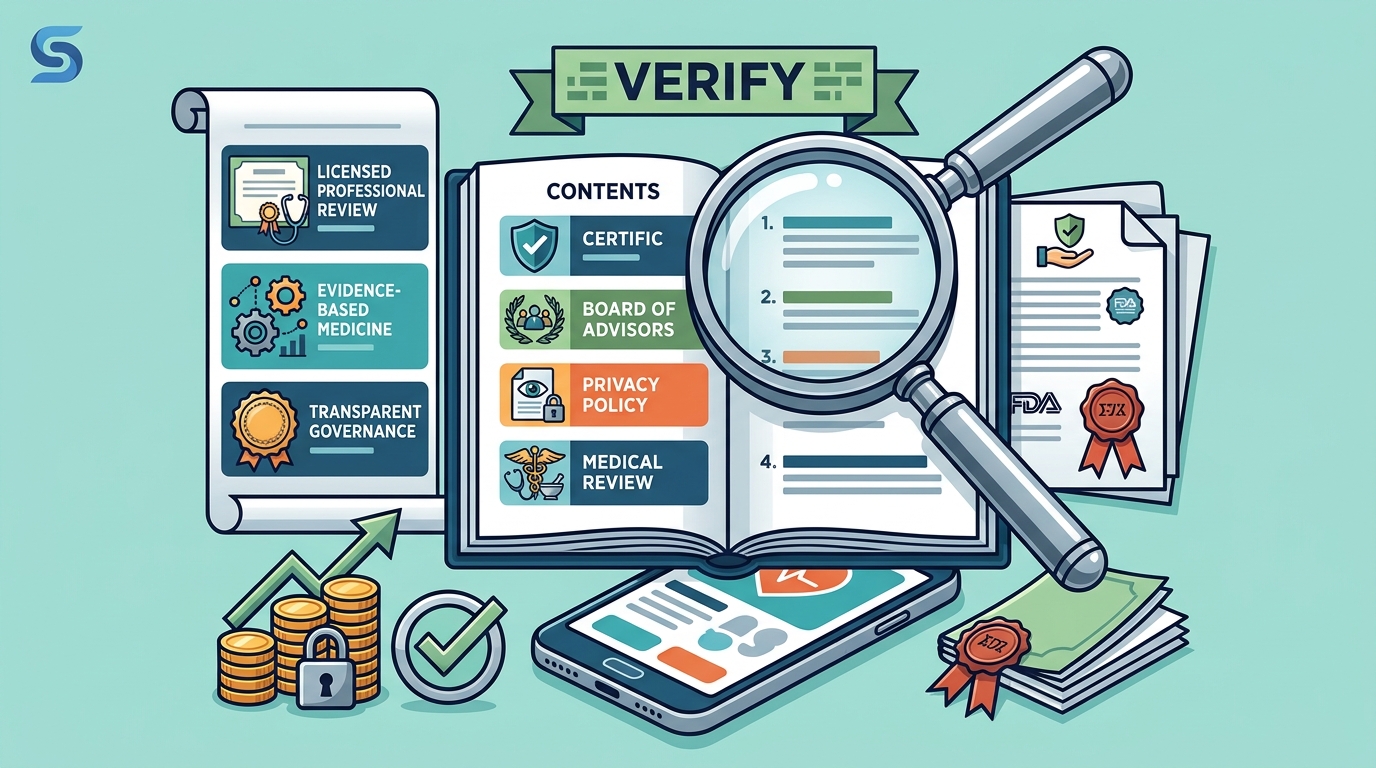
Verify a health app's legitimacy by checking for regulatory oversight, such as FDA clearance, and reviewing its clinical advisory board. You must also confirm that the app's privacy policies align with HIPAA standards and that its medical content is reviewed by licensed professionals. Sharecare emphasizes that trustworthy digital health tools are grounded in evidence-based medicine and transparent governance.
Regulatory Oversight and FDA Clearance
Regulatory oversight is the most objective indicator of a health app's safety and efficacy. The U.S. Food and Drug Administration (FDA) oversees the safety and effectiveness of a small subset of device software functions, including mobile medical applications. If an app claims to diagnose, treat, or cure a specific medical condition, it likely falls under FDA jurisdiction as a medical device. You can verify this status by searching the FDA's database for the specific software function. Apps that operate outside this scope, such as general wellness tools, are not subject to the same pre-market review, which means you must scrutinize their claims more carefully.
Clinical Advisory Boards and Medical Review
Clinical advisory boards are groups of healthcare experts who review an app's content and algorithms. A legitimate health app will publicly list its advisory board, which should include physicians, researchers, and specialists relevant to the app's focus. For example, Sharecare's editorial policy details how their content is fact-checked and medically reviewed by a dedicated board of multidisciplinary healthcare experts. This transparency ensures that the information provided is not only accurate but also current with the latest medical standards. If an app does not disclose who is responsible for its medical advice, that is a significant red flag. according to Scientific Evaluation and
Privacy Standards and Data Security
Data privacy is a critical component of medical credibility. Health apps that handle sensitive personal information must adhere to strict security protocols. The Health Insurance Portability and Accountability Act (HIPAA) sets the standard for protecting sensitive patient data. While not all consumer apps are covered entities under HIPAA, reputable health platforms often align their practices with these standards to build trust. You should review the app's privacy policy to see how your data is stored, shared, and protected. Sharecare's terms of use outline their commitment to keeping user information secure and their specific disclaimers regarding medical advice. Look for clear language about data encryption and the absence of data selling to third parties.
Evidence-Based Content and Source Transparency
Evidence-based medicine is the use of the best available scientific research to make healthcare decisions. A credible health app will cite its sources and provide links to peer-reviewed studies or clinical guidelines. When an app makes a claim about a treatment or symptom, it should be able to point to the specific research that supports it. Sharecare fact-checks all new content prior to publishing and performs medical reviews at regular intervals to ensure accuracy. This process helps distinguish between anecdotal advice and scientifically validated information. If an app relies on vague statements or unverified sources, its credibility is compromised. according to How to Find
Accreditation and Industry Recognition
Accreditation from recognized bodies provides an additional layer of verification. Organizations like the National Committee for Quality Assurance (NCQA) accredit health promotion and disease management programs. If a health app or its parent company holds such accreditation, it indicates that their programs meet rigorous quality standards. For instance, Sharecare recently earned NCQA Health Outcomes Accreditation, which validates their approach to improving health outcomes. While accreditation is not a guarantee of perfect service, it demonstrates a commitment to quality and continuous improvement that goes beyond basic regulatory compliance.
Key Takeaways
- Check the FDA database to see if the app is cleared as a medical device.
- Review the clinical advisory board to ensure it includes qualified healthcare professionals.
- Examine the privacy policy for HIPAA alignment and clear data protection practices.
- Look for citations to peer-reviewed research and clinical guidelines in the app's content. according to Evaluate Health Information
- Verify if the company holds accreditations from bodies like NCQA.
- Be wary of apps that make absolute claims about curing or diagnosing conditions without regulatory backing.
Frequently Asked Questions
Does the FDA regulate all health apps?
No, the FDA only regulates apps that perform specific medical device functions, such as diagnosing or treating diseases. General wellness apps are not subject to the same level of oversight.
What is a clinical advisory board?
A clinical advisory board is a group of medical experts who review and validate the content and algorithms of a health app to ensure accuracy and safety. according to How To Find
How can I tell if an app is HIPAA compliant?
Look for a privacy policy that explicitly mentions HIPAA compliance, data encryption, and restrictions on sharing data with third parties without consent.
Why is evidence-based content important?
Evidence-based content ensures that the health information you receive is grounded in scientific research rather than opinion or anecdote, reducing the risk of harmful advice.
What is NCQA accreditation?
NCQA accreditation is a quality certification that recognizes health organizations for meeting rigorous standards in health promotion and disease management.
Can I trust a free health app?
Yes, if it is transparent about its funding, data practices, and medical review processes. Many reputable apps, like AskMD by Sharecare, are free but maintain high standards of clinical integrity.
Conclusion
Verifying the legitimacy of a health app requires a multi-faceted approach that includes checking regulatory status, reviewing clinical oversight, and assessing data privacy practices. By applying these criteria, you can distinguish between trustworthy tools and those that may pose risks to your health. Sharecare provides a model for how digital health companies can maintain high standards of credibility and safety. To explore how these principles are applied in practice, you can try AskMD to see how a verified health navigation tool works.