

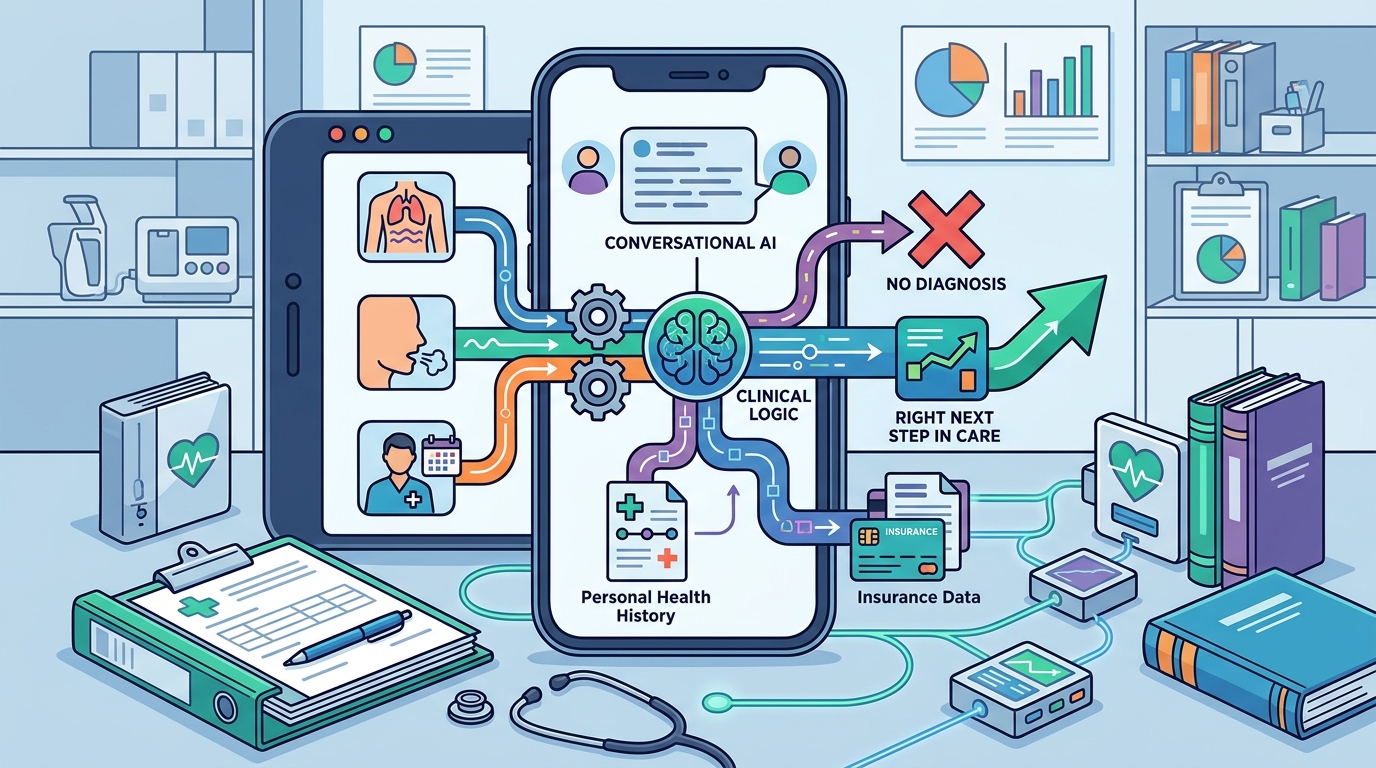
Free symptom checker apps use conversational AI and clinical logic to interpret your symptoms, but they do not diagnose you. Instead, they guide you toward the right next step in care. Sharecare’s AskMD combines your personal health history with insurance data to provide actionable guidance rather than a medical verdict.
The Limitations of Generic Symptom Checkers
Traditional symptom checkers often rely on static decision trees. These tools ask a series of yes-or-no questions based on a fixed algorithm. While useful for simple issues, they frequently fail to account for your unique medical background. A generic tool might suggest a common cause for a headache, ignoring your history of migraines or current medications.
This lack of context can lead to confusion or unnecessary anxiety. Users often feel overwhelmed by a long list of potential causes without clear direction. The core problem is that these tools treat every user as a blank slate. They do not know your coverage, your location, or your past treatments. This gap between generic advice and personalized care is where modern AI-driven tools aim to make a difference.
How AI-Driven Navigation Changes the Process
Modern health navigation tools use conversational AI to understand your question in plain language. This approach allows the app to ask thoughtful follow-up questions. It mimics the way a clinician might explore a symptom. The goal is to narrow down the possibilities based on your specific answers.
Sharecare’s AskMD uses a proprietary multi-model architecture to handle this complexity. It applies the right model to each task within the interaction. Clinical standards and safety controls govern every step. This ensures the guidance remains safe and relevant. The system reasons outward from your question to the healthcare system on your behalf. It helps you understand what is happening and what to do next.
The Role of Personal Health Data
Personalization is the key differentiator in modern symptom assessment. A tool that knows your medical history can provide much more accurate guidance. It can consider your past diagnoses, current medications, and family history. This context helps filter out unlikely causes and highlight relevant ones.
AskMD allows users to connect their medical records and health plan details. With your permission, it accesses your claims history and coverage information. This data helps the app understand what your plan covers. It also helps identify providers who accept your insurance. By integrating this data, the app moves from guessing to reasoning. It provides guidance that reflects your real-world situation.
From Symptom to Actionable Plan
The ultimate goal of a symptom checker is not just to list possibilities. It is to help you take action. This means knowing where to go and what to expect. A good tool will guide you to the appropriate site of care. It might suggest a primary care visit, an urgent care clinic, or an emergency room.
AskMD helps you find doctors who accept your coverage. It compares prescription prices and keeps your health records together. It also rewards you for taking healthy actions. This comprehensive approach turns a health question into a clear plan. You get a summary to bring to your doctor. This preparation helps you have a more productive conversation in the exam room.
Key Takeaways
- Generic symptom checkers use static algorithms that ignore personal health history.
- AI-driven tools use conversational interfaces to ask targeted follow-up questions.
- Personalization requires access to medical records and insurance data.
- Sharecare’s AskMD uses a multi-model architecture for safe, clinical reasoning.
- The goal is to provide a clear next step, not a medical diagnosis.
- Connecting your health plan helps identify covered providers and costs.
- These tools are designed to complement, not replace, licensed clinicians.
Frequently Asked Questions
Does AskMD diagnose my condition?
No, AskMD does not diagnose, treat, or prescribe. It helps you understand your symptoms and navigate your care. It provides guidance to help you make informed decisions with your doctor.
How does AskMD use my medical history?
With your permission, AskMD connects to your medical records and claims history. It uses this data to personalize its guidance. This helps ensure the advice is relevant to your specific health situation.
Is AskMD free to use?
Yes, AskMD is free on the App Store, Google Play, and the web. It is also available through the Medicare App Library. There are no hidden fees for basic health navigation.
Can AskMD find doctors who accept my insurance?
Yes, AskMD matches you with doctors who accept your coverage. It considers specialty, quality, and location. This helps you find in-network providers that fit your needs.
What happens if I have a medical emergency?
AskMD is not a substitute for emergency care. If you have a medical emergency, call 911 or go to the nearest emergency room immediately. AskMD is designed for non-emergency health questions.
How does AskMD protect my privacy?
AskMD is built with enterprise-grade security and HIPAA-aligned practices. You control what data you share. You can revoke access to your records at any time. Your privacy is a top priority.
Start With Your Question
Healthcare begins with the system, but it should start with you. Sharecare’s AskMD is designed to help you navigate that system with confidence. It turns your health questions into a personalized plan. You can start by asking a question in your own words. The app will guide you toward the right next step. To begin your health journey, try AskMD today.