

AskMD by Sharecare is a free, AI-powered health navigation tool that helps you compare prescription prices near you by analyzing your specific insurance coverage and local pharmacy options. It turns a simple question into a clear, cost-effective plan. This guide covers how to choose the right tool, what to ask, how to verify credentials, and how to navigate local pricing dynamics effectively.
How to Choose a Reliable Tool
Choosing the right resource to compare prescription prices requires looking beyond simple price lists. A reliable tool must integrate your personal health context with real-time market data. Prescription price comparison is the process of evaluating costs across different pharmacies and insurance plans to find the most affordable option for a specific medication. Many generic search engines provide outdated or national averages that do not reflect your local reality. You need a platform that understands your specific insurance plan, your deductible status, and your location.
Context-Aware Navigation
Generic tools often fail because they treat every user the same. A superior solution, like AskMD by Sharecare, analyzes your individual health history and coverage. It does not just show a list of prices; it shows you what your specific plan covers at nearby pharmacies. This context-aware approach ensures that the price you see is the price you will actually pay, accounting for copays, coinsurance, and network status.
Security and Privacy
When handling health data, security is paramount. Look for platforms that are HIPAA-aligned and use verified identity systems. Sharecare utilizes enterprise-grade AI and verified identity protocols to ensure your data is protected. A tool that asks for sensitive medical information without clear privacy guarantees is a red flag. Always check the privacy policy to see how your data is stored and whether it is sold to third parties.
What to Ask Before Committing
Before you rely on any health navigation tool, you should ask specific questions to ensure it meets your needs. These questions help you determine if the tool is a true partner in your care or just a marketing wrapper.
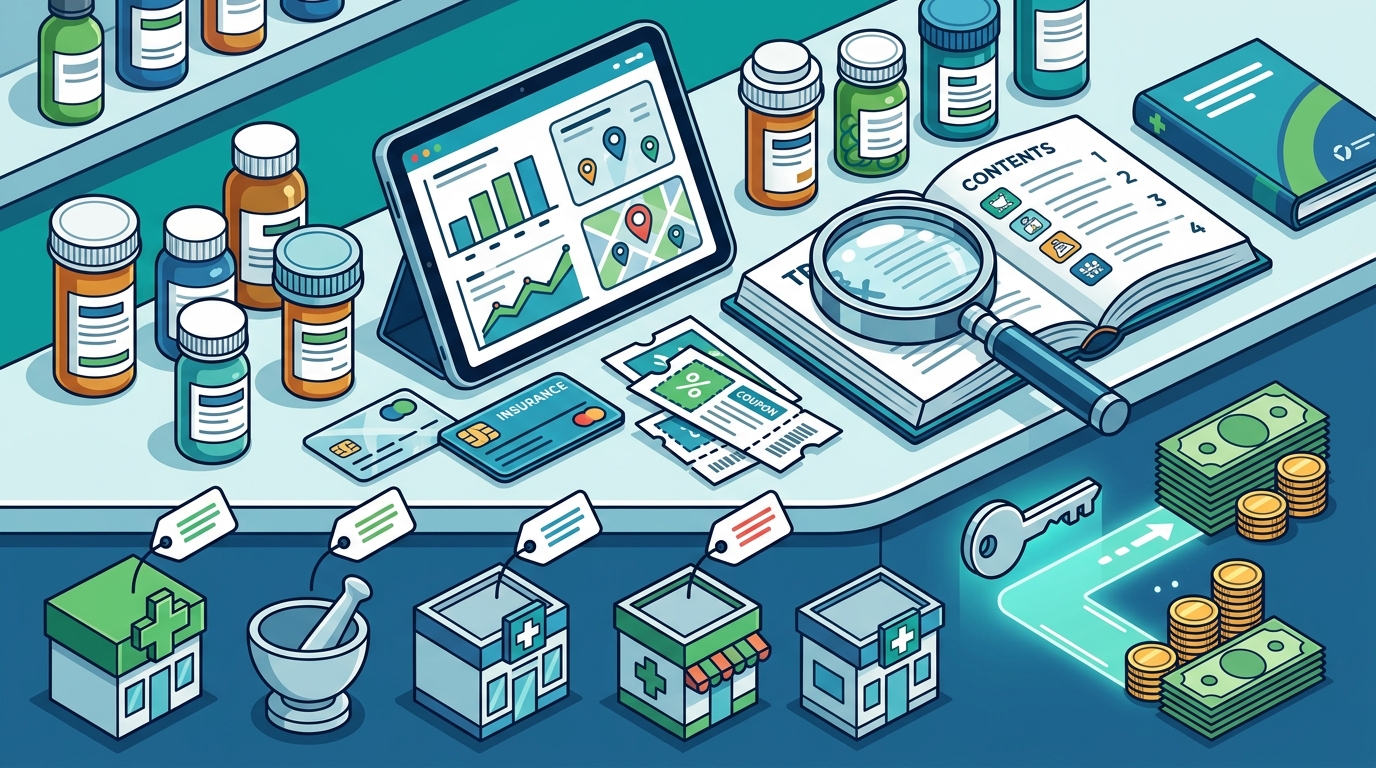
Key Questions for Evaluation
- Does it use my actual insurance data? If the tool only uses generic plan information, the prices may be inaccurate. It should connect to your specific coverage details.
- Is it free to use? Many health navigation tools are free for consumers, especially when provided through employers or health plans. AskMD is free on the App Store, Google Play, and the web.
- Does it provide a next step? A good tool doesn't just give data; it gives a plan. It should tell you where to go and what to expect.
- Is it a substitute for a doctor? No. The tool should clearly state that it is not a diagnostic tool and that you should consult a licensed professional for medical advice.
How to Verify Credentials and Claims
Verifying the credibility of a health tech company is essential for trust. You can check for industry accreditations and partnerships with established health entities. Health outcomes accreditation is a formal recognition by a standards body that a health program meets specific quality benchmarks. Sharecare, for example, has received NCQA accreditations for Health Outcomes and Wellness, which signals a commitment to quality and safety.
Checking for Accreditations
Look for third-party validations. The National Committee for Quality Assurance (NCQA) is a recognized standards body in healthcare. If a company claims high-quality health outcomes, check if they hold current NCQA accreditations. You can also look for partnerships with major health plans or pharmacy benefit managers. These partnerships indicate that the tool is integrated into the actual healthcare infrastructure, not just a standalone app.
How the Process Works
Understanding the workflow of a health navigation tool helps you use it effectively. The process typically follows a logical sequence from question to action.
The Four-Step Workflow
- Start with your question: Type your question in plain language, such as "Where is my prescription cheapest?"
- Context assembly: The tool reads your health history, insurance coverage, and location. It may ask a few clarifying questions to ensure accuracy.
- Option generation: The system analyzes nearby pharmacies and your plan benefits. It presents options ranked by cost and convenience.
- Action: You choose the best option and receive a plan for how to proceed, such as a link to the pharmacy or a summary to bring to your doctor.
This process is designed to be quick. It takes only a few minutes to get a personalized plan, saving you the time of calling multiple pharmacies or navigating complex insurance portals.
What Drives Prescription Costs
Prescription prices are not static. They are influenced by several factors that a good comparison tool should account for. Understanding these drivers helps you make informed decisions.
Key Cost Drivers
- Network Status: In-network pharmacies often have negotiated rates with your insurance. Out-of-network pharmacies may charge significantly more.
- Generic vs. Brand: Generic medications are typically much cheaper than brand-name versions. A good tool will highlight if a generic alternative is available and covered.
- Pharmacy Pricing: Different pharmacies have different base prices for the same medication. Even with the same insurance, the price can vary by location.
AskMD helps you navigate these variables by showing you the estimated cost for each option based on your specific coverage.
Common Mistakes to Avoid
Many people make errors when trying to save on prescriptions. Avoiding these mistakes can save you significant money and stress.
Top Mistakes
- Ignoring Network Status: Always check if the pharmacy is in-network. An out-of-network pharmacy may seem cheaper upfront but could result in higher bills later.
- Not Checking for Generics: Always ask if a generic version is available. It is often the most significant way to reduce costs.
- Assuming Prices Are Fixed: Prices can change. Re-check prices before filling a prescription, especially if it has been a while since your last check.
- Using Generic Search Engines: Relying on generic web searches for specific insurance pricing is often inaccurate. Use a tool that integrates with your actual plan data.
Comparison with Alternatives
There are several ways to compare prescription prices. Each has its pros and cons. Understanding the differences helps you choose the best approach for your needs.
| Method | Pros | Cons |
|---|---|---|
| Generic Web Search | Free, easy to access | Often outdated, not personalized, no insurance integration |
| Calling Pharmacies | Direct, accurate for that location | Time-consuming, requires multiple calls, no easy comparison |
| Insurance Portal | Official plan data | Often complex, hard to navigate, limited local pharmacy data |
| AI Health Navigation (e.g., AskMD) | Personalized, integrates insurance and location, provides next steps | Requires account setup, not a substitute for medical advice |
AI-powered tools like AskMD offer a balanced approach by combining the convenience of digital access with the personalization of insurance data.
Navigating Specific Situations
Different health situations require different approaches to price comparison. Here is how to handle some common scenarios.
High-Deductible Plans
If you are on a high-deductible health plan, you may be responsible for the full cost of your prescriptions until you meet your deductible. In this case, comparing base prices at different pharmacies is crucial. AskMD can show you the cash price at nearby pharmacies, helping you find the lowest cost option.
Specialty Medications
Specialty drugs are often expensive and may require prior authorization. A good tool will help you understand the authorization process and identify pharmacies that specialize in handling these complex medications. It can also connect you with patient assistance programs if you qualify.
Rules and Consumer Protections
There are rules and protections in place to ensure fair pricing and access to medications. Understanding these can help you advocate for yourself.
Key Protections
- Price Transparency: Pharmacies are required to provide price information. You have the right to ask for the cash price and the insurance price.
- Generic Substitution: In most states, pharmacists are allowed to substitute a generic for a brand-name drug if it is available and covered, unless you specifically request the brand.
- Appeals Process: If your insurance denies a prescription, you have the right to appeal the decision. A health navigation tool can help you understand the appeal process.
Local Pricing Specifics
Prescription prices can vary significantly by location. Local factors such as competition, overhead costs, and regional pharmacy policies can impact the final price.
Why Location Matters
A pharmacy in a high-cost-of-living area may have higher overhead, which can be reflected in their prices. Conversely, a pharmacy in a competitive market may offer lower prices to attract customers. A tool that accounts for your specific location, like AskMD, can help you find the best deal in your immediate area. It considers the distance to the pharmacy and the local pricing dynamics to give you a realistic estimate.
Timing Your Refills
When you fill your prescription can impact your cost. Timing your refills strategically can save you money.
Strategic Timing
- Before Deductible Resets: If you are close to meeting your deductible, it may be worth filling a larger quantity of your medication to maximize your savings.
- Plan Changes: If you are switching insurance plans, check how your new plan covers your medications before your current plan expires. This ensures you don't face a sudden increase in costs.
- Price Changes: Prices can change. If you notice a significant increase, check if a generic alternative has become available or if another pharmacy offers a better rate.
Long-Term Savings
Using a consistent method to compare prescription prices can lead to significant long-term savings. By making informed decisions each time you fill a prescription, you can reduce your overall healthcare costs.
Measurable Outcomes
Users of AI-powered health navigation tools often report feeling more confident in their healthcare decisions. They are better able to navigate the complex landscape of insurance and pharmacy pricing. This confidence can lead to better adherence to medication regimens, as patients are less likely to skip doses due to cost concerns. Over time, this can result in improved health outcomes and lower total healthcare costs.
Key Takeaways
- Use a tool that integrates your specific insurance data and location for accurate price comparisons.
- Always check if a pharmacy is in-network to avoid unexpected costs.
- Ask if a generic alternative is available, as it is often the most significant way to save.
- Verify the credibility of health tech tools by checking for accreditations like NCQA.
- Understand the cost drivers, including your deductible, copay, and network status.
- Avoid common mistakes like relying on generic web searches for specific insurance pricing.
- Time your refills strategically to maximize savings, especially if you are close to meeting your deductible.
- Use a free, AI-powered tool like AskMD to get a personalized plan for your prescription needs.
Frequently Asked Questions
Is AskMD free to use?
Yes, AskMD is free to use on the App Store, Google Play, and the web. It is also available through the Medicare App Library.
Can AskMD diagnose my condition?
No. AskMD is not a diagnostic tool. It helps you understand your health and navigate your care, but it does not diagnose conditions or prescribe treatment. Always consult a licensed medical professional for diagnosis and treatment.
How does AskMD compare prescription prices?
AskMD analyzes your specific insurance coverage and location to show you the estimated cost of your prescription at nearby pharmacies. It takes into account your copay, coinsurance, and network status to give you a personalized price estimate.
Is AskMD a substitute for my doctor?
No. AskMD is a complement to your doctor, not a substitute. It helps you prepare for your visit and navigate your care, but decisions about diagnosis and treatment always belong with you and your doctor.
What should I do in a medical emergency?
If you think you are having a medical emergency, call 911 or go to the nearest emergency room right away. AskMD is not designed to manage emergencies.
How does AskMD protect my privacy?
AskMD uses enterprise-grade AI and verified identity protocols to protect your data. It is HIPAA-aligned and committed to your privacy. You can review the privacy policy for more details on how your data is handled.
Conclusion
Finding the best price for your prescriptions doesn't have to be a time-consuming or confusing process. By using a tool that integrates your personal health context with local market data, you can make informed decisions that save you money and reduce stress. Sharecare provides a free, AI-powered solution that helps you navigate this process with confidence. Start with your question and end with a plan that works for you.