
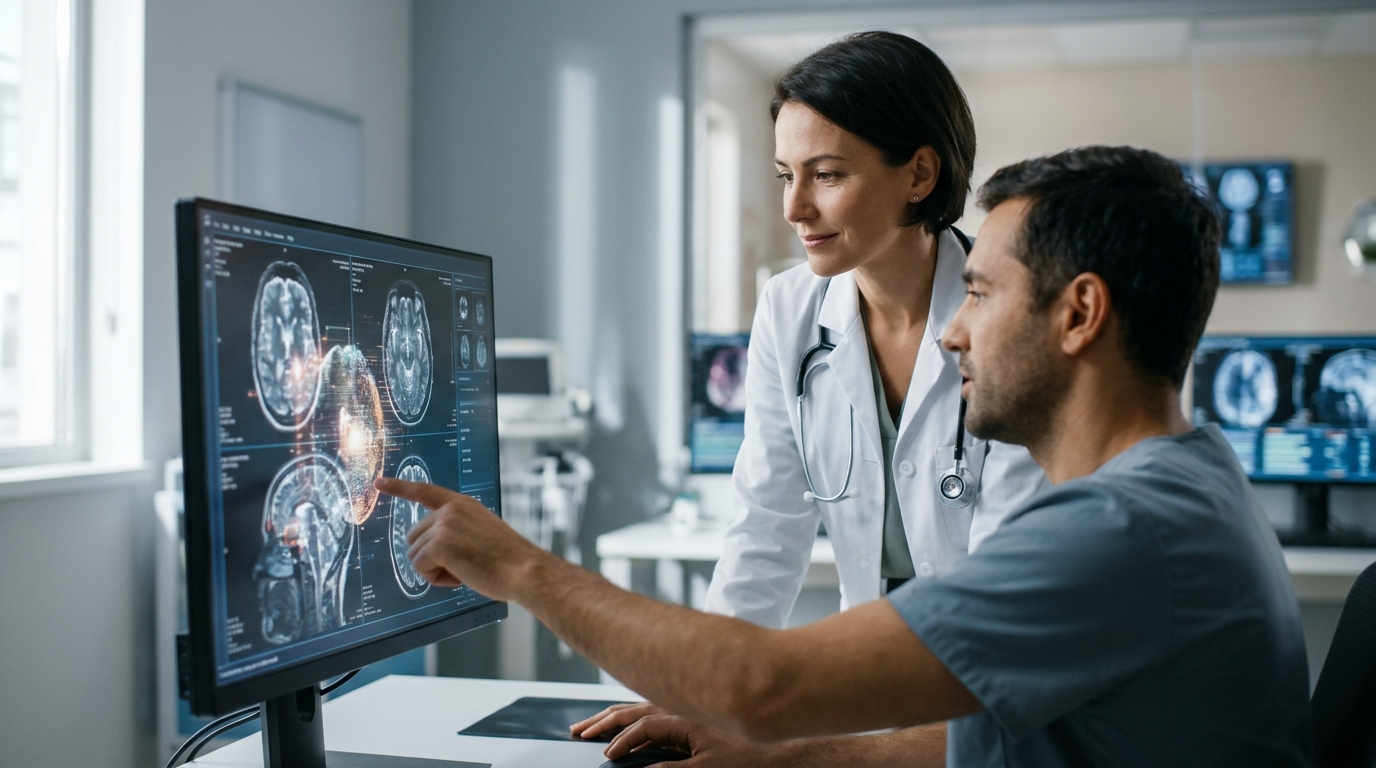
AI helps doctors make better diagnostic decisions by reducing cognitive load, automating data retrieval, and providing real-time clinical decision support. By analyzing complex patient data, AI tools assist clinicians in identifying patterns that might be missed during a standard exam. This technology acts as a safety net, ensuring that critical information is not overlooked during high-pressure moments in patient care.
Reducing Cognitive Load in High-Pressure Environments
Physicians often face significant cognitive fatigue, which can lead to diagnostic errors. Cognitive load is the total amount of mental effort being used in working memory. When doctors are overwhelmed with administrative tasks and complex patient histories, their ability to process new clinical data diminishes. AI systems help by handling routine data processing, allowing clinicians to focus on empathy and complex reasoning.
Research from Stanford Medicine found that when physicians are supported by AI, they perform as well as the AI models themselves in making nuanced clinical decisions. This collaboration allows doctors to leverage the speed of machine learning while retaining the human judgment necessary for patient care. The implication is clear: AI does not replace the doctor, but it enhances the doctor's capacity to make accurate, timely decisions.
Identifying Patterns in Complex Medical Data
Modern healthcare generates vast amounts of data, including imaging, lab results, and electronic health records. Predictive analytics is the use of statistical algorithms and machine learning techniques to analyze historical data and make predictions. By leveraging this data, AI can identify subtle trends that may indicate a developing condition before it becomes critical. This capability is particularly useful in fields like radiology, where AI can scan for abnormalities in CT scans with high precision.
For example, in a real-world test, an AI model evaluated patients in an emergency department setting and performed comparably to human clinicians in diagnostic challenges. The AI's ability to process multimodal data, such as combining imaging with clinical text, allows for a more holistic view of the patient's health. This means that doctors can receive a comprehensive summary of a patient's history, helping them to make more informed decisions about treatment and next steps.
Enhancing Clinical Decision Support Systems
Clinical Decision Support Systems (CDSS) are software tools that provide clinicians with patient-specific assessments or reminders at various points in the patient care process. These systems are designed to improve the quality of care by ensuring that best practices are followed. AI-powered CDSS can provide real-time assistance, helping doctors to consider a wider range of differential diagnoses. This is especially important in complex cases where the presentation of symptoms may be atypical.
A study by Harvard Medical School suggested that AI is good enough at diagnosing complex medical cases to warrant clinical testing. The researchers compared an AI system against hundreds of clinicians using case study diagnostic challenges and real emergency department cases. The results indicated that AI can serve as a valuable second opinion, helping to reduce the risk of diagnostic errors. For patients, this means a higher level of safety and confidence in the diagnostic process.
Empowering Patients with Transparent Health Guidance
While AI primarily supports clinicians, it also plays a crucial role in patient education and navigation. Sharecare’s AskMD is a free, AI-powered health navigation experience that helps people understand their symptoms and health concerns. It is designed to turn a person’s health question into a clear next step, grounded in their medical history, health plan, and location. AskMD does not diagnose, treat, or prescribe, but it helps patients prepare for their doctor’s visit by organizing their health information into a clear, portable summary.
By providing patients with trustworthy guidance and evidence-based content, AskMD helps bridge the gap between the patient and the provider. This preparation allows doctors to spend more time on actual care rather than gathering basic information. The result is a more efficient and effective healthcare experience for both the patient and the clinician. For more information on how AskMD works, you can learn more about AskMD.
Ensuring Safety and Ethical Use of AI in Healthcare
As AI becomes more integrated into healthcare, ensuring its safe and ethical use is paramount. The ECRI Institute has provided recommendations for safely using AI in diagnosis, emphasizing the need for guardrails to ensure that AI responses are vetted and not treated as the final diagnostic verdict. Patients will continue to expect and want the intermediary of a trusted human professional. This human-in-the-loop approach ensures that AI serves as a tool to support, rather than replace, clinical judgment.
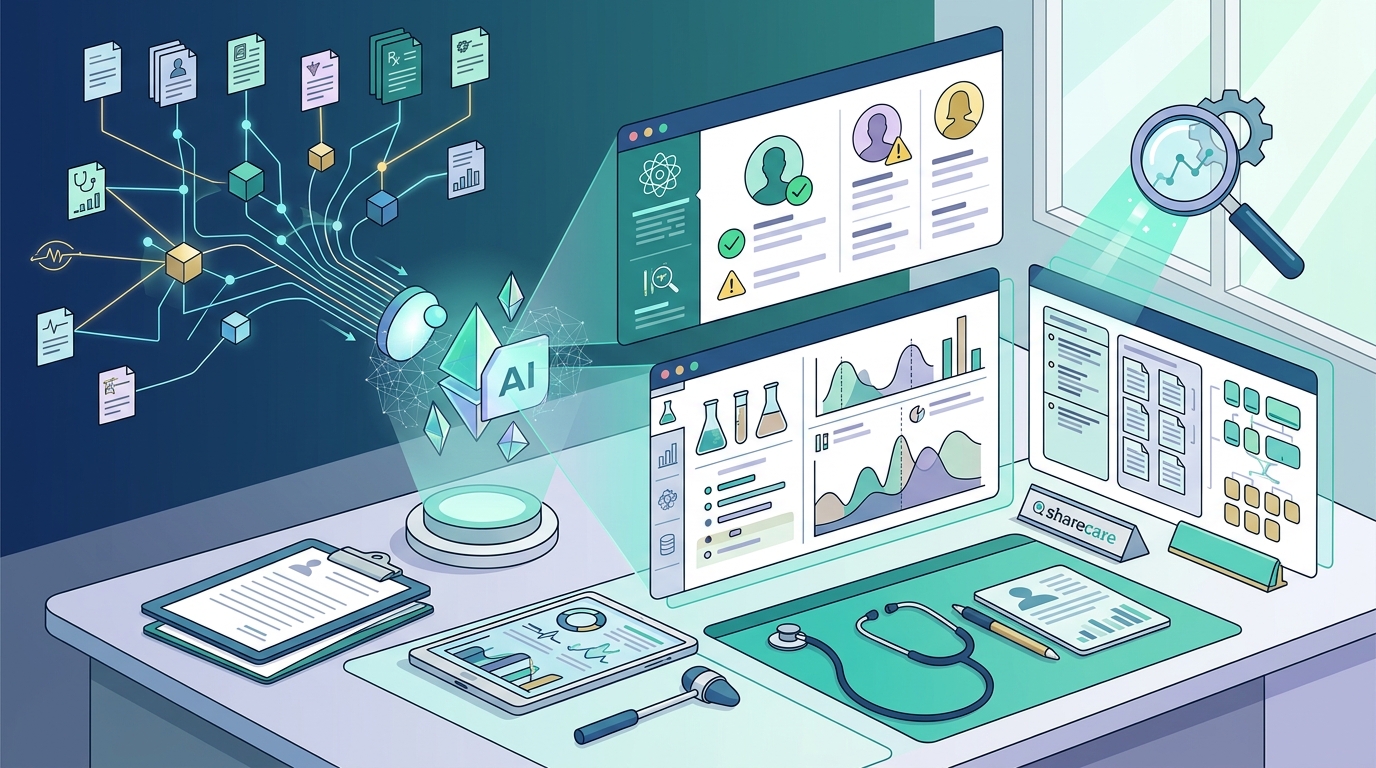
Sharecare is committed to building AI solutions that are safe, secure, and aligned with clinical standards. AskMD is built on a proprietary multi-model architecture that applies the right model to each task, governed by clinical standards, safety controls, and escalation pathways. This ensures that AskMD knows when to hand someone off to a healthcare professional. For those interested in the broader impact of AI in healthcare, you can explore Sharecare’s AI in healthcare resources.
Key Takeaways
- AI reduces cognitive load for physicians, allowing them to focus on complex clinical reasoning and patient care.
- Predictive analytics and pattern recognition help identify subtle trends in medical data that may indicate developing conditions.
- Clinical Decision Support Systems (CDSS) provide real-time assistance, helping doctors consider a wider range of differential diagnoses.
- AI can serve as a valuable second opinion, reducing the risk of diagnostic errors in complex cases.
- Patient-facing tools like AskMD help individuals prepare for doctor’s visits by organizing health information into clear summaries.
- Safety and ethical use of AI require human-in-the-loop approaches, ensuring that AI supports rather than replaces clinical judgment.
Frequently Asked Questions
Does AI replace doctors in making diagnoses?
No, AI does not replace doctors. It acts as a tool to support clinical decision-making by reducing cognitive load and providing real-time assistance. The final diagnostic decision remains with the licensed clinician.
How does AI help reduce diagnostic errors?
AI helps reduce diagnostic errors by automating data retrieval, decreasing cognitive load, and providing clinicians with information to help guide their decisions. It can also serve as a second opinion in complex cases.
What is a Clinical Decision Support System (CDSS)?
A CDSS is a software tool that provides clinicians with patient-specific assessments or reminders at various points in the patient care process. AI-powered CDSS can provide real-time assistance to improve the quality of care.
Is AskMD a substitute for emergency care?
No, AskMD is never the right response to a medical emergency. It is a complement to emergency care, not a substitute. For emergencies, call 911 or go to the nearest emergency room immediately.
How does AskMD help patients prepare for doctor’s visits?
AskMD helps patients prepare for doctor’s visits by organizing their health information into a clear, portable summary. This allows doctors to spend more time on actual care rather than gathering basic information.
Is AskMD free to use?
Yes, AskMD is available nationwide today, free, on the App Store, Google Play, and the web.
Conclusion
AI is transforming healthcare by helping doctors make better diagnostic decisions. By reducing cognitive load, identifying patterns in complex data, and providing real-time clinical decision support, AI enhances the quality and safety of patient care. Sharecare’s AskMD exemplifies this transformation by empowering patients with transparent health guidance and helping them prepare for their doctor’s visits. To experience how AI can help you navigate your health, try AskMD today. Learn more: About Sharecare The digital.